
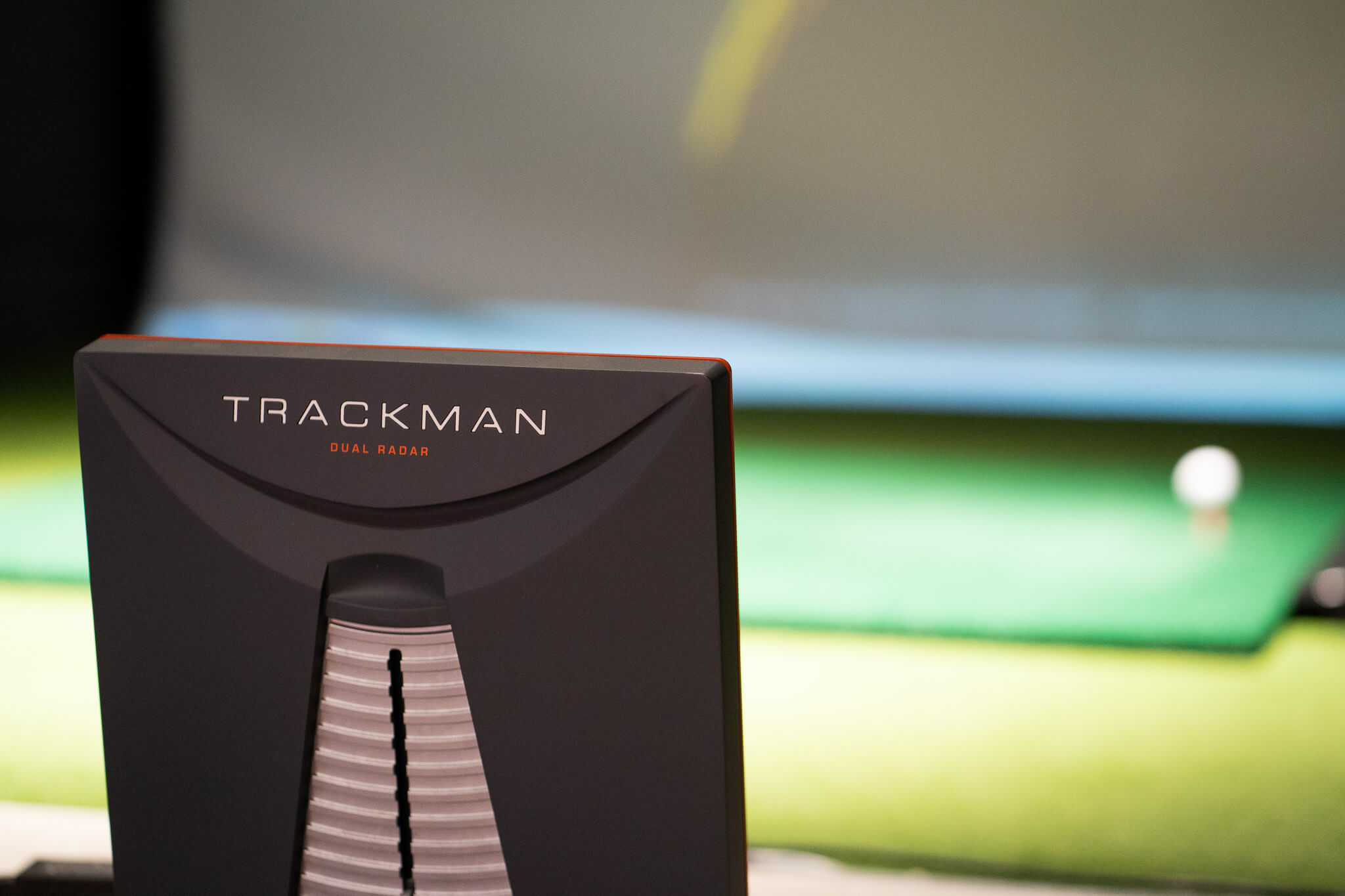
Understanding TrackMan numbers can feel overwhelming at first. You are presented with dozens of metrics, each claiming to explain why your golf ball behaves the way it does. Among all of them, club path is one of the most important — and one of the most misunderstood.
Club path is not just a “TrackMan stat”. It is a fundamental description of how the club is moving through impact, and it has a direct influence on ball flight, shot shape, start direction (when combined with face angle), strike quality, and consistency.
This post breaks down exactly what club path is, how TrackMan measures it, how it affects your shots, what numbers are considered good, and how to use this information intelligently rather than obsessively.
What Is Club Path?
Club path is the direction the clubhead is travelling at the moment of impact, measured relative to the target line.
TrackMan defines club path as:
The horizontal direction the clubhead is moving at impact, relative to the target line.
It is measured in degrees:
-
Positive numbers mean the club is moving to the right of the target (in-to-out).
-
Negative numbers mean the club is moving to the left of the target (out-to-in).
-
Zero degrees means the club is moving perfectly along the target line.
For a right-handed golfer:
-
+5° club path = 5 degrees to the right
-
-5° club path = 5 degrees to the left
This measurement is taken at the exact moment of impact, not during the backswing or downswing as a whole.
Why Club Path Matters So Much
Club path is one of the primary controllers of:
-
Shot shape (draw, fade, slice, hook)
-
Curvature severity
-
Low-point control (especially with irons)
-
Strike pattern consistency
-
Spin axis (how much the ball curves)
However, club path does not work alone. It must always be understood in relationship to face angle. Many golfers misunderstand club path because they look at it in isolation.
Club path tells you:
-
Which direction the club is moving
Face angle tells you: -
Where the face is pointing
The relationship between the two determines curvature.
Club Path vs Swing Path (Common Confusion)
A very common mistake is confusing club path with swing path.
-
Swing path is the arc the club travels around your body.
-
Club path is the direction the clubhead is moving at impact.
Because of attack angle, shaft lean, and body alignment, your swing path and club path are not always the same.
For example:
-
You can have a neutral swing path but a leftward club path.
-
You can feel like you swing “from the inside” but still deliver the club left.
TrackMan only measures what actually happens at impact, not what it feels like or what it looks like on video.
How TrackMan Measures Club Path
TrackMan uses Doppler radar to track the clubhead in three dimensions as it approaches and passes through impact.
From this data, it calculates:
-
The direction the clubhead is travelling horizontally
-
Relative to the target line
-
At the exact moment the ball leaves the face
This is why TrackMan club path is so reliable — it is not a visual estimate, it is a precise measurement.
Understanding Positive and Negative Club Path Numbers
In-to-Out Club Path (Positive Numbers)
An in-to-out path means the clubhead is travelling to the right of the target line at impact.
Common traits:
-
Often associated with draws and pushes
-
Can be powerful when controlled
-
Very common in strong players
Typical numbers:
-
+1° to +3°: Gentle in-to-out
-
+4° to +6°: Strong in-to-out
-
+7° or more: Extreme in-to-out (often problematic)
Too much in-to-out can lead to:
-
Pushes
-
Blocks
-
Hooks (if the face closes relative to the path)
Out-to-In Club Path (Negative Numbers)
An out-to-in path means the clubhead is travelling to the left of the target line at impact.
Common traits:
-
Often associated with fades and slices
-
Very common in amateur golfers
-
Can be very playable when controlled
Typical numbers:
-
-1° to -3°: Gentle out-to-in
-
-4° to -6°: Strong out-to-in
-
-7° or more: Severe cut/slice path
Too much out-to-in can lead to:
-
Pulls
-
Pull-slices
-
Loss of distance
-
Inconsistent strike
Neutral Club Path (Near Zero)
A club path close to zero means the clubhead is travelling almost exactly down the target line.
This does not mean the ball will go straight — that depends on face angle — but it gives you the greatest margin for error.
Neutral does not mean “better” for everyone, but it does tend to simplify ball flight control.

Club Path and Ball Flight Laws
Modern ball flight laws tell us:
-
Face angle primarily controls start direction
-
Club path (relative to face) primarily controls curvature
This is critical.
Example 1: Push-Draw
-
Club Path: +4°
-
Face Angle: +2°
-
Result: Ball starts right, curves left
Example 2: Pull-Fade
-
Club Path: -4°
-
Face Angle: -2°
-
Result: Ball starts left, curves right
Example 3: Straight Shot
-
Club Path: +2°
-
Face Angle: +2°
-
Result: Ball starts right, flies straight
This is why golfers often say:
“My club path is good but the ball still goes right.”
Because the face angle matches the path, there is no curvature.
What Is a “Good” Club Path?
There is no single perfect club path number.
A good club path depends on:
-
Desired shot shape
-
Club being used
-
Skill level
-
Typical miss pattern
However, we can give useful guidelines.
With Irons
Most elite players:
-
Club Path: between -2° and +2°
-
Slight bias either way depending on preference
Why narrower with irons?
-
Precision matters more
-
Steep attack angles magnify path issues
-
Strike quality is more sensitive
With Driver
Driver paths tend to be:
-
Slightly more in-to-out
-
Often between +1° and +4°
Why?
-
Optimises launch and spin
-
Encourages upward attack angle
-
Reduces spin loft
Many tour players hit controlled draws with driver for this reason.
Club Path and Attack Angle (Important Relationship)
Club path does not exist in isolation from attack angle.
Attack angle (AoA) is the vertical direction the club is travelling at impact.
Key relationship:
-
Downward attack angles shift club path left
-
Upward attack angles shift club path right
This means:
-
A golfer with a steep iron strike may naturally deliver a leftward club path
-
A golfer hitting up on driver may naturally deliver a rightward club path
This is why copying numbers from tour players without understanding context is a mistake.
Why Golfers Obsess Over Club Path (And Why They Shouldn’t)
Club path is measurable, visible, and tempting to “fix”.
But many golfers chase a club path number without understanding:
-
Their face angle tendencies
-
Their strike pattern
-
Their shot shape preference
-
Their consistency level
A golfer with:
-
Club Path: -3°
-
Face Angle: -2°
-
Predictable fade
is often far better than a golfer with: -
Club Path: +1°
-
Face Angle: varies wildly
Consistency beats perfection.
Common Club Path Myths
Myth 1: You Must Swing In-to-Out to Be Good
Many elite players play controlled fades with leftward paths. There is no universal requirement to swing in-to-out.
Myth 2: Zero Club Path Is Ideal
Zero is neutral, not magical. A predictable bias is often better than chasing zero.
Myth 3: Path Causes Slices
Path alone does not cause slices. A slice happens when the face is open relative to the path.
Myth 4: More In-to-Out Means More Power
Excessive in-to-out often reduces efficiency and strike quality.
How to Use Club Path Data Properly
The best way to use club path is:
-
Identify your stock shot
-
Measure your average path, not your best
-
Look at dispersion, not single swings
-
Match path to face control
-
Build a pattern, not a position
TrackMan is a feedback tool, not a swing model.
Typical Club Path Patterns by Golfer Type
Beginner Golfers
-
Often -5° to -10°
-
Face usually open to path
-
Result: slice
Mid-Handicap Golfers
-
Often -3° to +3°
-
Inconsistent face control
-
Mixed shot shapes
Low-Handicap / Elite Golfers
-
Tight path windows
-
Face consistently controlled relative to path
-
Predictable curvature
Improving Club Path (The Right Way)
Improving club path is rarely about “swinging more from the inside”.
It is more often about:
-
Setup alignment
-
Ball position
-
Low-point control
-
Body rotation
-
Strike location
Trying to force club path changes without addressing these usually makes things worse.
When Club Path Should Be Changed (And When It Shouldn’t)
You should consider changing club path if:
-
Your miss is uncontrollable
-
Curvature is excessive
-
Strike quality is poor
-
Dispersion is wide
You should not change it if:
-
Your shot shape is predictable
-
Your misses are playable
-
Your numbers repeat
-
You score well
Golf is not won on TrackMan — it is won on the course.
Final Thoughts: Club Path Is a Tool, Not a Target
Club path is one of the most powerful insights TrackMan provides, but it must be understood in context.
The goal is not:
-
A perfect number
-
A tour-average stat
-
A textbook swing
The goal is:
-
Predictable ball flight
-
Tight dispersion
-
Confident decision-making
When club path works with face angle, not against it, golf becomes simpler.
If you understand club path properly, you stop fighting the swing — and start owning your pattern.
Book a free trial on Trackman


